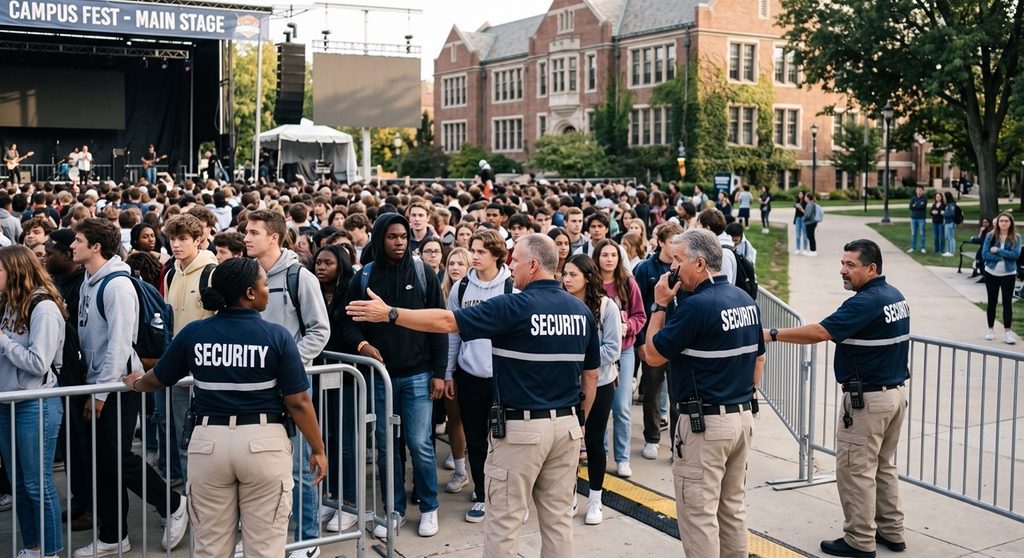
College campuses are open and dynamic communities that are set up to promote collaborative learning; yet if the institution holds a high-profile event—for example, a commencement ceremony, an alum gala, an athletic competition, or a significant guest lecture—the usual atmosphere on campus is greatly altered.
At the same time, hundreds or even thousands of outsiders come, causing at once problems with parking, greater safety risks, and possible disruptions to normal academic activities.
For campus supervisors, facility directors, and purchasing managers, arranging security for special events needs a practical blueprint that combines strict physical protection with a smooth and welcoming experience for guests.
Establishing Perimeter Zoning to Protect the Academic Mission
A major difficulty when there are large-scale events on campus is stopping the crowd from spilling over into other buildings that are not part of the event, for example, student residence halls, research laboratories, and actively used classrooms.
Effective crowd management starts with carrying out intentional zoning of the perimeter well in advance of visitors arriving at the venue doors. Campus supervisors are able to direct event traffic smoothly towards the venue by setting up designated routes for vehicles, shuttle drop-off areas, and temporary footpaths, at the same time protecting the rest of the institution.
Signage that clearly shows the way, together with security staff who are on the premises, ensures that the attendees stay within the designated areas and thus enables classes and everyday campus life to go on without being interrupted.
Implementing Efficient, Service-Driven Bag Checks
The entrance checkpoint is often a key factor in determining whether an event is a success; long and disorganized queues not only annoy the attendees and harm the institution’s reputation but also result in weak crowd bottlenecks outside the venue.
The best practices involve setting up multi-lane entry checkpoints fitted with stanchions, providing dedicated express lanes for guests who have no luggage, and using standardized inspection tables. Security officers who are carrying out bag searches and metal detection checks must receive thorough training in customer service and in verbal de-escalation.
Access control can be maintained through clear communication of entry rules, proper handling of guests’ personal belongings, and speedy processing. This enforces necessary security protocols without compromising hospitality.
Discreet Logistics for VIP and Speaker Arrivals
High-profile guests such as major donors, corporate trustees, elected officials, and visiting dignitaries are often invited to take part in campus events. In order to secure these people, careful coordination must take place between the event planners, the local police force, and the security personnel on site.
Security surveys should identify secure drop-off areas for vehicles, provide private green rooms, and set up protected transit routes that bypass crowded public concourses. Planning corridors in isolation ensures the safety and privacy of distinguished guests without drawing undue attention or pulling security staff away from their main crowd-control duties.
Finding a Security Partner
At Doyle Security Services (DSS), we work alongside colleges, universities, and educational institutions to provide thorough, scalable event security services suited to the traditions of higher education.
Our carefully trained security staff handle every aspect with care, whether coordinating commencement ceremonies for thousands of families, arranging high-profile keynote speakers, or managing entry checkpoints with customer-service-oriented bag screening.
We assist campus administrators, business owners, and security directors in organizing safe, unforgettable, and uninterrupted special events.
Visit doylesecurityservices.com now to speak with our team and learn how our dedicated campus security services can help protect your next big event.