When organizations consider how to protect a specific facility, they usually consider strong locks, perimeter fencing, and advanced alarm systems. While these physical security measures remain critical elements of an effective security plan, proactive property security planning starts well before the very first lock is installed.
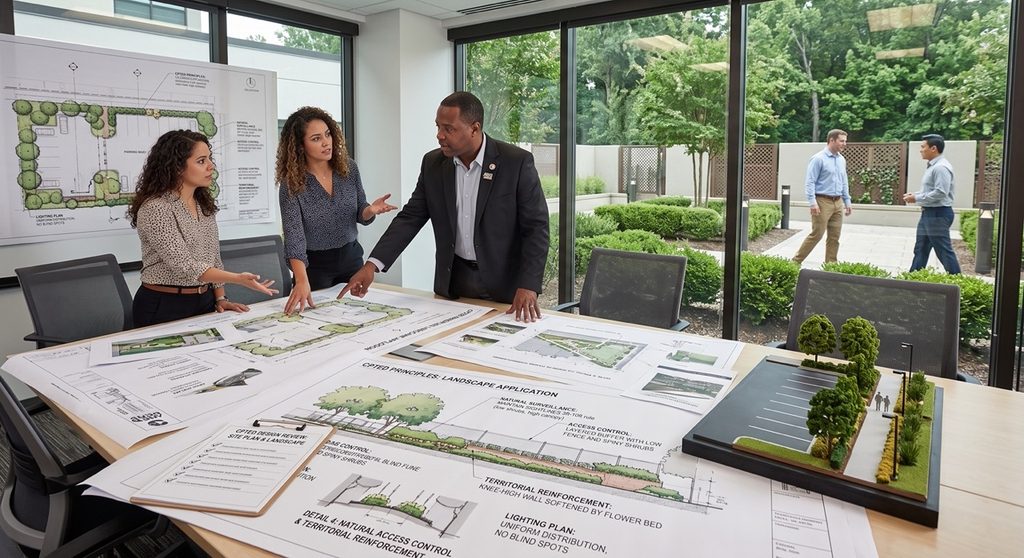
Aligning property designs with security needs is part of Crime Prevention Through Environmental Design (CPTED). This set of principle helps developers to introduce physical barriers, lighting, and foot-traffic controls into landscape design to improve safety without causing a modern commercial development to look as if it is a fortified compound.
For commercial developers, business owners and security directors, CPTED provides an active, multidisciplinary approach that shapes human behavior by means of deliberate architecture and landscaping.
If the property is designed in such a way as to eliminate potential vulnerabilities, the organization will be able to greatly discourage criminal behavior, reduce its liability, and improve visitor comfort without its property ending up looking like a fortress.
Natural Surveillance: Eliminating Concealment Through Design
CPTED relies on the concept of natural surveillance, which involves designing an environment so that people can easily keep an eye on their surroundings. Crime flourishes in places where areas are hidden or in shadows. If potential bad actors think that they are clearly visible and their chances of being easily detected are good, they will be less likely to attempt an offense.
Natural surveillance can be put into practice by combining careful landscaping with proper lighting. According to a basic industry guideline, clear lines of sight should be achieved by clipping ground-level shrubs so that they are less than three feet high and by pruning the tree canopies so that they are above seven feet. This helps to remove any hidden corners close to building boundaries and along pedestrian paths.
By installing uniform LED lighting that eliminates glare over parking structures, transit routes, and entryways, property owners eliminate dark staging areas and make it so that regular foot traffic naturally keeps the environment in check.
Natural Access Control and Territorial Reinforcement
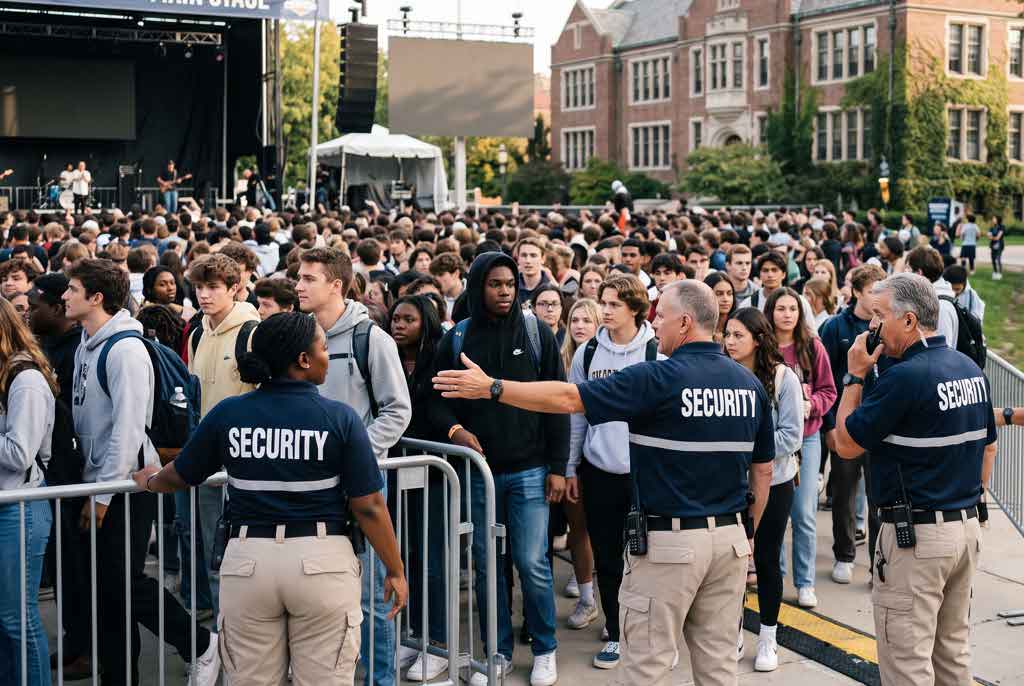
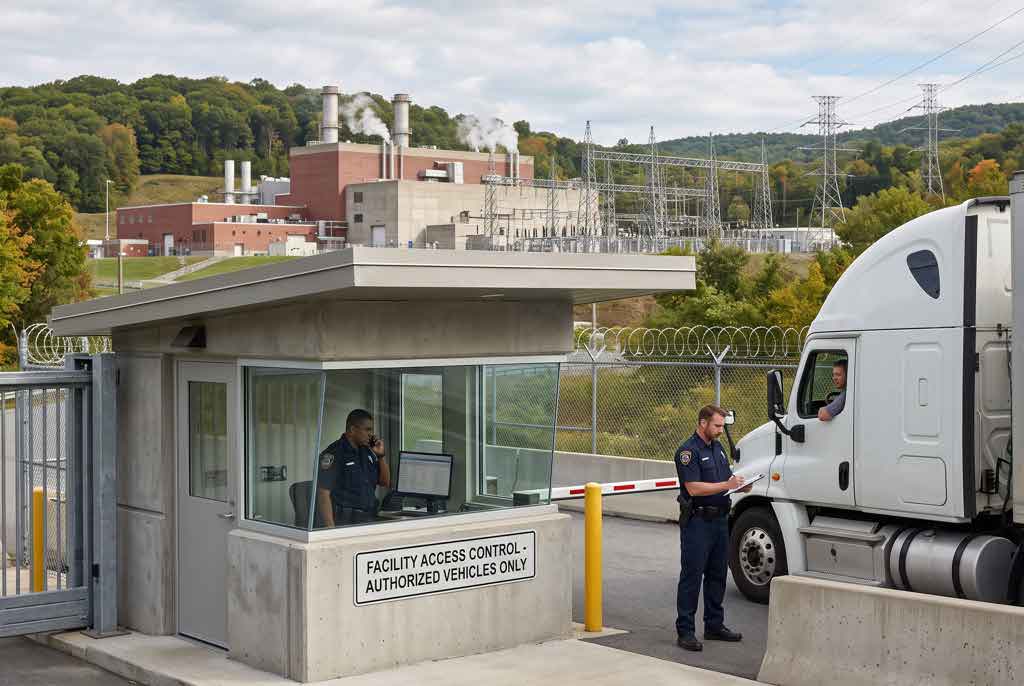
The principles of CPTED also apply to foot traffic across and around a property, with natural access control gently guiding the flow of both pedestrians and vehicles towards designated and monitored entrances, while simultaneously preventing access to sensitive areas.
Instead of depending solely on physical barriers made of concrete or metal, landscape architects and developers can make use of architectural features—such as ornamental planters, changes in grade, low retaining walls, and clearly defined pavement textures—to intuitively lead visitors to the main checkpoints.
This deliberate guidance creates clear physical distinctions between public sidewalks, semi-private courtyards, and private entrances, making restricted areas obvious. Authorized visitors are welcomed and guided, while unauthorized people immediately seem out of place and conspicuous, making it much easier for staff to spot and address potential trespassers.
Maintenance and the Vital Role of Professional Guarding
The physical state and care of a property send out a strong message that can affect people’s behavior.
One of the principles of CPTED concerning maintenance is that well-cared-for landscaping, the immediate removal of graffiti, clean paths, and properly working exterior lights all indicate that the property is being carefully and actively managed.
On the other hand, properties that are neglected attract illegal activities because they give the impression that there is no supervision.
So, in order to deter negative incidents and attempts at unauthorized access, maintaining a well-tended, well-lit, and open environment around a property is essential.
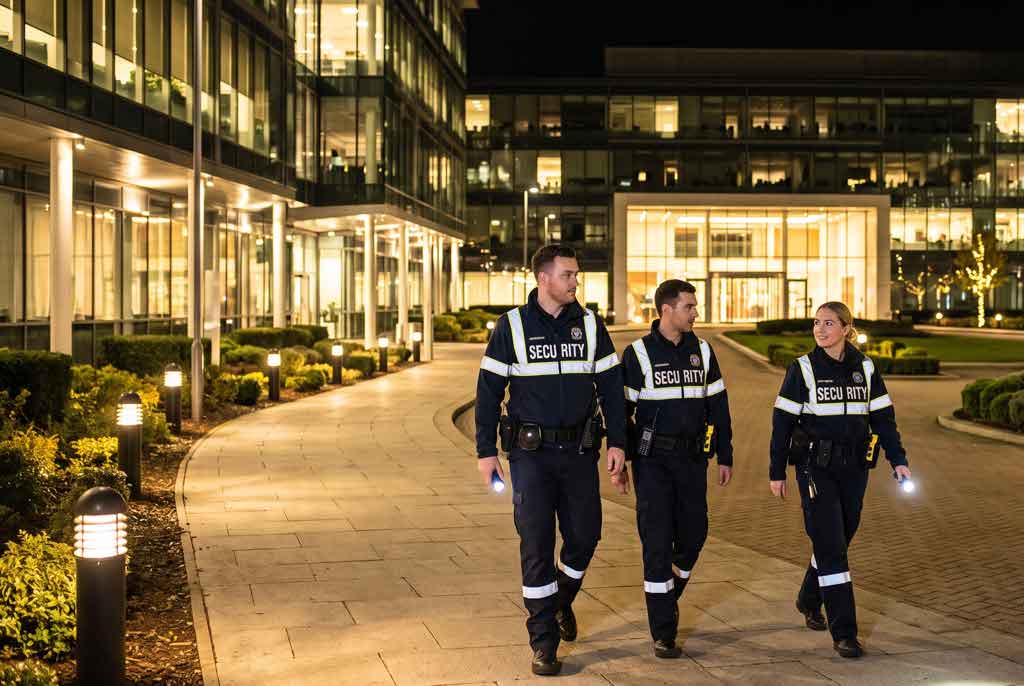
Trained staff support effective environmental design. Careful architectural design and well-kept grounds establish the security framework, but professional security officers and regular patrols bring these boundaries to life.
Officers on the premises check that the external lighting is working, ensure emergency exits remain clear, and stop anyone suspicious who crosses the property boundaries.
Finding the Right Security Partner
At DSS, we help property owners, commercial developers, and corporate managers turn CPTED principles into practical defense strategies.
Our security experts conduct thorough physical risk assessments to examine sightlines, access points, and the exterior layout of your premises. Our recommendations can help your organization develop an effective security plan to protect your facilities.
Using environmental design principles, top-quality commercial guarding, regular mobile patrols, and modern electronic surveillance, DSS ensures your property stays welcoming and upscale while maintaining a strong security standard.
Visit doylesecurityservices.com to schedule a consultation and learn how our comprehensive security solutions can protect your facilities from the ground up.