College and university campuses – whether in urban or suburban environments – operate like small cities. On any given day, a single campus handles traffic from thousands of students, the constant movement of hundreds of operational staff, visits from scores of outside vendors, and the arrival of members of the general public for high-profile cultural and athletic events. For university administrators, security directors, and campus safety teams, this open ecosystem presents a complex challenge. Academic freedom flourishes in an open, welcoming environment, but ensuring security requires strict protection against the growing range of current threats. Achieving the right balance demands a shift away from simple traditional physical security coverage and reactive safety measures toward a sophisticated, multi-tiered security strategy.
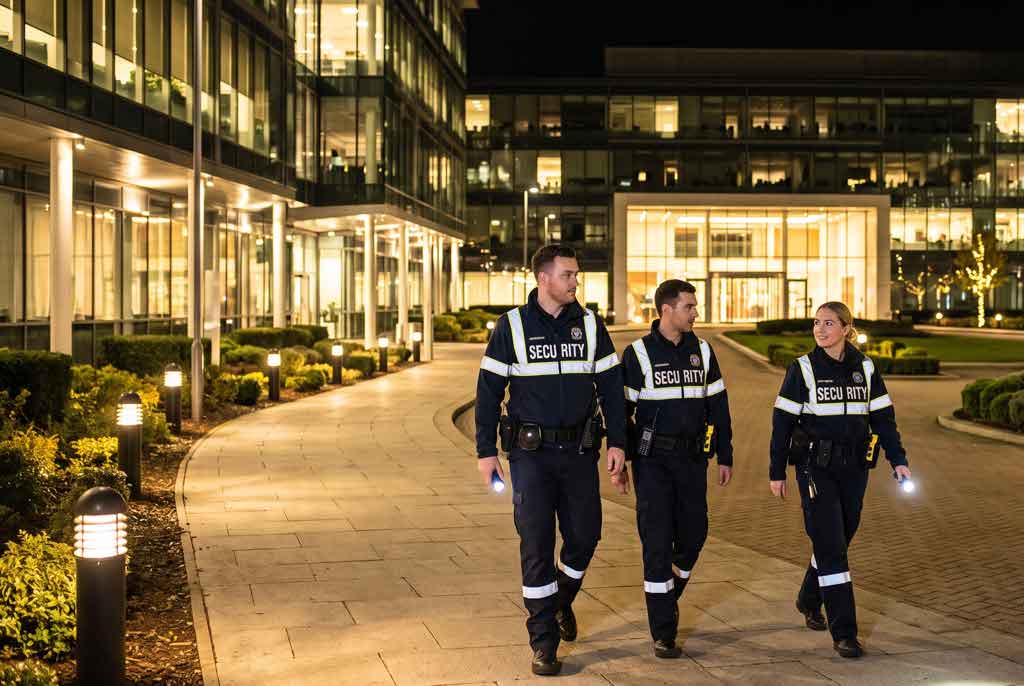
Today’s campus landscapes often feature expansive walkways, open spaces, and transparent glass facades, designed to promote a relaxed atmosphere of collaborative learning, but also require highly trained and carefully vetted security personnel to monitor fluid, unpredictable perimeters and complex learning spaces.
Managing the vulnerabilities that result from such spaces requires dividing the campus into separate operational zones, each requiring a customized combination of physical security, technological measures, and specialized protective services.
Residence Hall Security
The outermost layer of personal security on campus begins where students live. Residence halls require comprehensive access control without making students feel like prisoners in their own living quarters.
Achieving this involves pairing automated access control technology with highly trained, unarmed security personnel. Modern best practices dictate limited points of entry for late-night access, backed by electronic credential verification and a visible guard presence. Security officers assigned to residential sectors do more than monitor doors; they provide a reassuring human presence, oversee visitor access, and conduct regular interior patrols to identify maintenance hazards or broken door latches before they escalate into security breaches.
Libraries and Academic Halls
Unlike residence halls, academic buildings, and university libraries experience massive, fluctuating waves of foot traffic throughout the day. These structures house valuable technological assets, massive numbers of books and research materials, confidential records, and proprietary research laboratories that require stringent intellectual property protection.
Security in these high-traffic hubs focuses on perimeter awareness and rapid incident de-escalation. Stationing professional officers at main circulation points ensures that any disruptive behavior or unauthorized access is addressed immediately, maintaining a peaceful milieu conducive to study while keeping critical emergency exits clear and under uninterrupted surveillance.
High-Profile Venues and Crowd Logistics
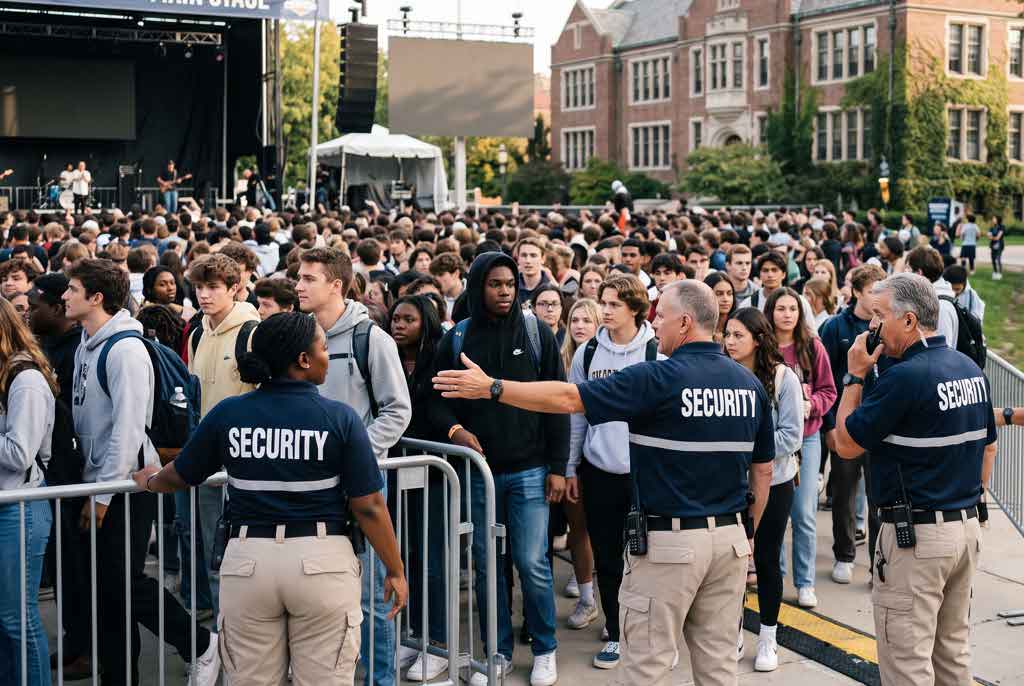
Many campuses are also home to high-profile public venues, such as university stadiums and performing arts centers. These facilities regularly draw off-campus visitors, corporate donors, and high-profile VIPs, transforming the campus into a busy public marketplace. Managing these venues requires specialized event security systems that merge rigid logistics with high-end hospitality.
Security teams must execute swift bag checks, coordinate restricted-access backstage zones, and manage complex parking lot perimeters while acting as helpful ambassadors for the university brand. This unique environment calls for versatile professionals who can shift effortlessly from crowd management to emergency medical triage if a spectator requires assistance.
Understanding Clery Act and Title IX Requirements
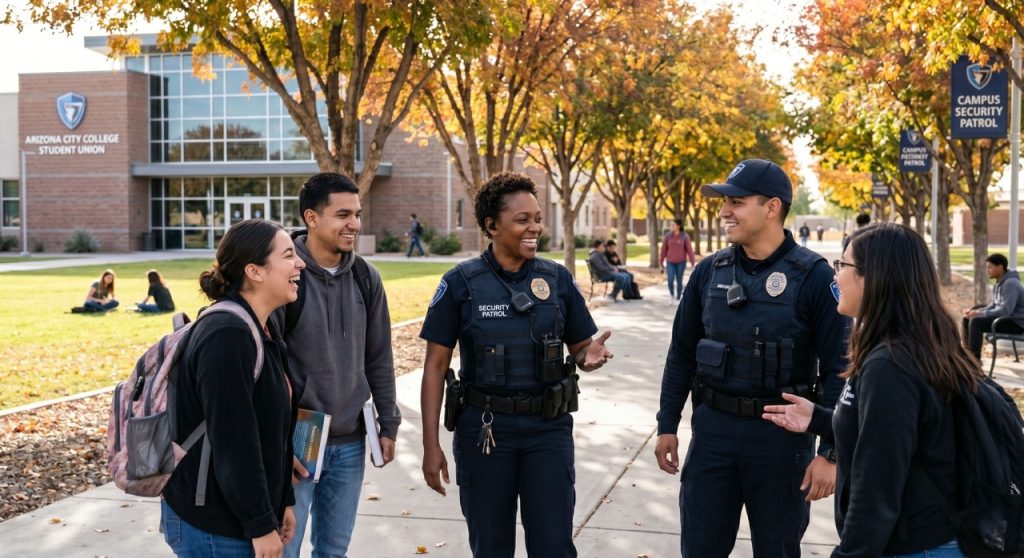
Effective campus security plans must integrate intensive customer service training for security officers, who serve as the daily, visible face of safety for students, faculty, and visitors. Because an academic environment thrives on mutual trust and open accessibility, these officers must excel at clear communication, empathetic engagement, and situational de-escalation. Crucially, this frontline hospitality must be directly paired with rigorous training on federal compliance mandates—specifically the Clery Act and Title IX reporting requirements.
The Clery Act is a federal consumer protection and transparency law that requires colleges and universities to track, log, and publicly disclose campus crime statistics (including sexual assault, VAWA offenses, and hazing metrics) through an Annual Security Report, while also issuing timely warnings to the community regarding ongoing threats. Under this law, security officers are designated as Campus Security Authorities (CSAs) who are legally obligated to report any covered crimes brought to their attention.
In parallel, Title IX is a civil rights statute that prohibits discrimination, harassment, and violence based on sex or gender in federally funded education programs. Within this framework, campus security personnel are required to immediately report incidents of sexual misconduct to the institution’s Title IX Coordinator, so that victims can receive immediate supportive measures and access to equitable grievance procedures. The importance of integrating these protocols into daily security operations cannot be overstated. Beyond protecting the university from severe federal compliance audits and financial penalties—which can exceed tens of thousands of dollars per violation—strict adherence to the Clery Act and Title IX only safeguards essential federal funding, builds public institutional transparency, and establishes an active culture of civil rights protection and personal safety where the entire academic community can live, work, and learn with total peace of mind.
DSS Expertise
Managing the complex requirements of effective campus security demands a security partner with deep institutional experience and expansive resources. Doyle Security Services (DSS) provides comprehensive, tailored campus security solutions for a large portfolio of leading colleges and universities across New York, New Jersey, and Pennsylvania, with the ability to serve high educational institutions nationwide.
From deploying polished, front-desk concierge professionals at high-profile performing arts centers to providing vigilant, round-the-clock physical guarding for campus residence halls and research complexes, our thoroughly trained personnel integrate fluently into your institutional culture.
Our expert team of security professionals can evaluate your campus’ current security coverage, identify potential threats through our intelligence gathering and analysis division, and develop the most effective combination of physical and electronic security measures to ensure the safety of your students, buildings, visitors, and assets.
Visit doylesecurityservices.com to discover how we can improve your campus safety infrastructure and deliver the peace of mind your campus community deserves.